
Home / BPC-157 and TB-500 in Tissue Repair Research
BPC-157 and TB-500 in Tissue Repair Research
September 26, 2026
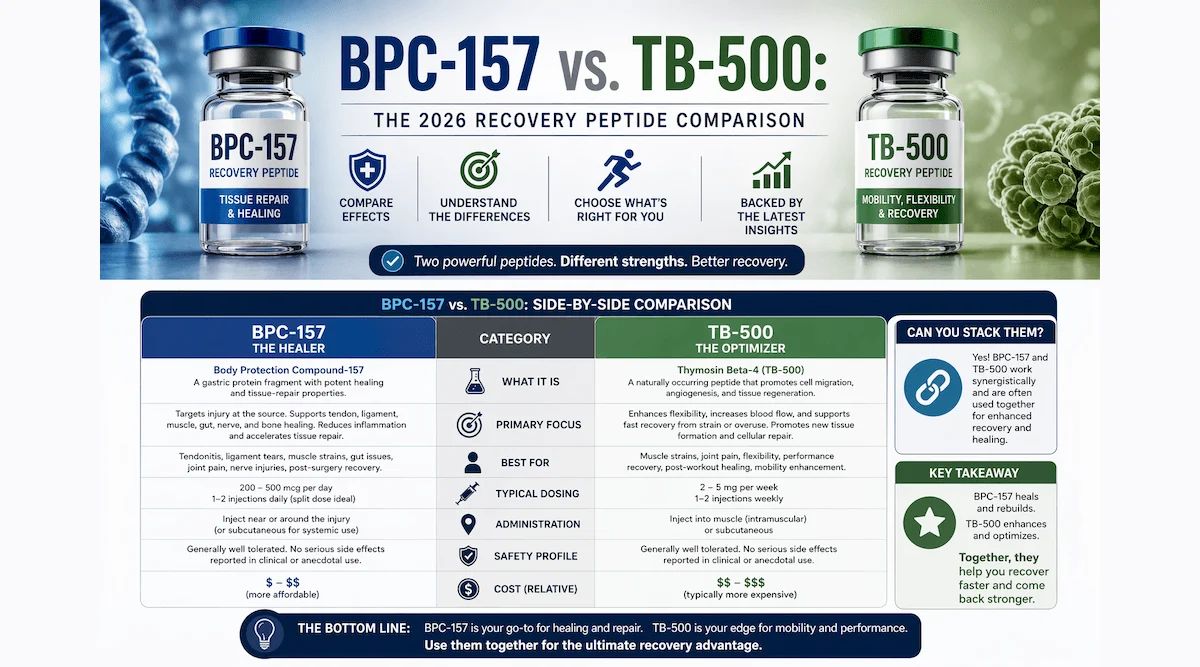
BPC-157 (Body Protection Compound-157) and TB-500 (Thymosin Beta-4 fragment) are two of the most widely referenced peptides in tissue-repair research, and are frequently studied together for their potentially complementary mechanisms.
BPC-157
BPC-157 is a synthetic peptide derived from a protective protein found in gastric juice. Preclinical research has explored its role in angiogenesis (new blood vessel formation) and its interaction with the growth hormone receptor pathway, with a particular research focus on gut and tendon tissue models.
TB-500
TB-500 is a synthetic fragment of Thymosin Beta-4, a protein involved in actin regulation — a key part of cell migration and structural remodeling. Research models have examined its role in supporting cell migration to areas of tissue damage.
Why they're often studied together
Because BPC-157 research often centers on localized signaling and TB-500 research often centers on cell migration and structural remodeling, researchers frequently combine the two in preclinical models to examine whether their mechanisms are additive or synergistic.
As with all compounds on this site, both are sold strictly for laboratory research use — not for human or animal consumption.
This article is for general educational and research purposes only and is not medical advice. It has not been evaluated by the FDA and is not intended to diagnose, treat, cure, or prevent any disease. Products discussed are sold strictly for laboratory research use, not for human consumption. Consult a licensed physician before making any health decisions.
← Back to home