
Home / Peptide Storage and Reconstitution Basics
Peptide Storage and Reconstitution Basics
September 26, 2026
Lyophilized (freeze-dried) peptides are relatively stable, but how they're stored and reconstituted has a direct effect on how well they hold up over the course of a research protocol.
Storing lyophilized material
Unreconstituted peptide vials are generally stored in a freezer (around -20°C) for long-term stability, or refrigerated for shorter-term use. Repeated freeze-thaw cycles and exposure to light and humidity can accelerate degradation, so vials are best kept in their original packaging until use.
Reconstitution
Bacteriostatic water is the standard diluent used to reconstitute lyophilized peptides for laboratory use, since its benzyl alcohol content helps inhibit bacterial growth across multiple draws from the same vial. When reconstituting:
- Bring the vial to room temperature before adding diluent.
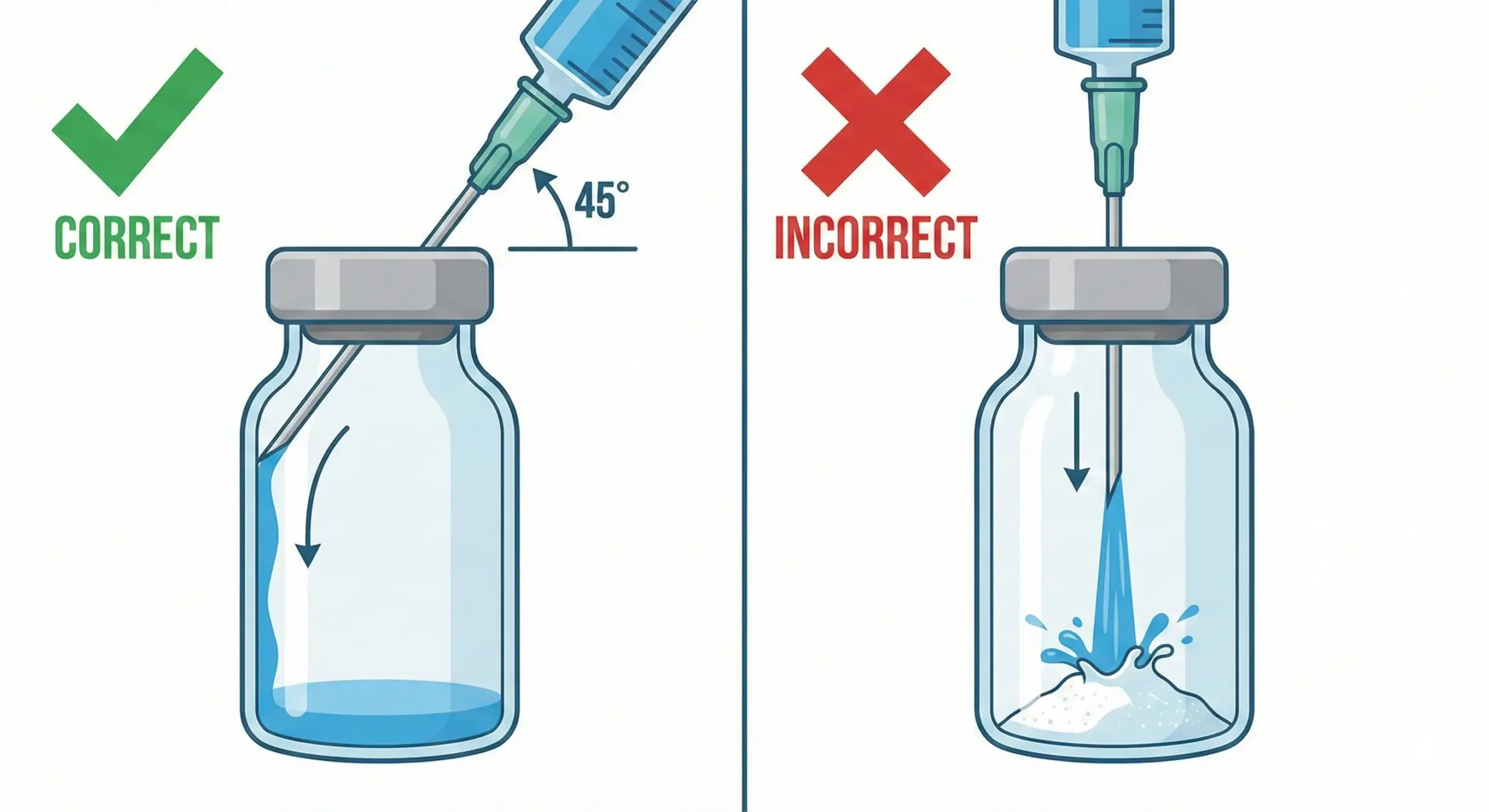
- Add the bacteriostatic water slowly, directing it down the inside wall of the vial rather than directly onto the lyophilized powder.
- Gently swirl rather than shake — vigorous agitation can denature some peptides.
After reconstitution
Once reconstituted, most peptides are considerably less stable than in lyophilized form and should be refrigerated and used within the timeframe indicated by the supplier's documentation. Labeling the vial with the reconstitution date helps keep track of how long it's been in solution.
This article is for general educational and research purposes only and is not medical advice. It has not been evaluated by the FDA and is not intended to diagnose, treat, cure, or prevent any disease. Products discussed are sold strictly for laboratory research use, not for human consumption. Consult a licensed physician before making any health decisions.
← Back to home